
When you set up a hardware wallet, it shows you a list of words, usually 12 or 24, and asks you to write them down. That list is your recovery phrase. If the device is lost, broken or stolen, those words let you restore your funds on a new one. Without them, there is no reset button and no support line that can help.
Most people write the words on the card that comes in the box, put it in a drawer and move on. It is a start. It is not a backup you should rely on for years.
What the recovery phrase actually protects
The phrase is not a password to an account. It is the master key from which your wallet derives every address it controls. The hardware device keeps a copy of that key away from your computer and phone, but the device itself is replaceable. The words are not.
This changes how you should think about storage. Your coins are not inside the wallet. They are recorded on the network, and whoever holds the phrase can reach them from any compatible device. So the backup has two jobs at once: it must last a long time, and it must stay out of the wrong hands.
Why paper alone is not enough
Paper is cheap and easy to write on. It is also fragile in ways that are easy to underestimate.
- Fire. Paper burns at temperatures far below what an ordinary house fire reaches. A drawer, a book or a cardboard box offers little protection.
- Water. A burst pipe, a flood or a leaking roof can soak a card in minutes. Ink runs, and wet paper tears when you try to handle it.
- Time. Many inks fade in light or humidity. Paper yellows, turns brittle and attracts mold. A note that looks fine today may be hard to read after a decade in a damp basement.
- People. Paper gets thrown out during a move, recycled by someone tidying up, or read by a guest who should not have seen it.
Each risk is small on its own. Over years, they add up, and a single failure is permanent.
Moving the phrase onto metal
The usual answer is to keep a copy of your phrase on metal, most often stainless steel. Steel does not burn, does not soak up water and does not fade. A good plate can come through heat that would destroy paper and still be readable.
There are a few common formats:
- Stamped plates, where you hammer letters into the surface with a punch set.
- Tile systems, where you slide individual letter tiles into a steel frame.
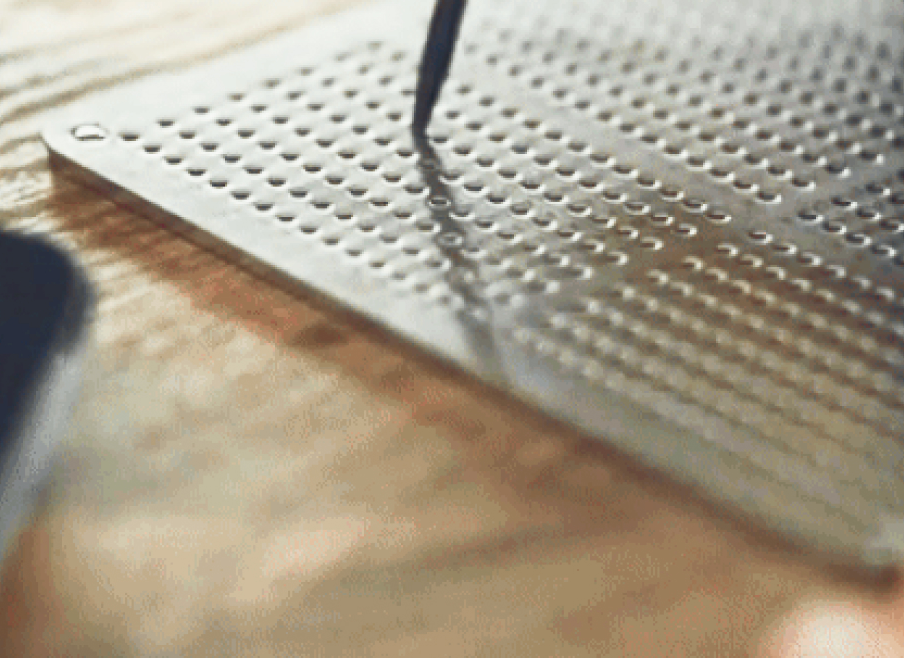
- Punched-hole plates, where you mark each letter in a grid by making a dent or hole with a metal stylus or center punch.
Each has trade-offs. Tiles are quick to set up but have small loose parts. Stamping takes patience and a steady hand. Punched grids are compact and hard to misread once you understand the layout.
You usually do not need to record every full word. On the standard word list most wallets use, the first four letters of each word are enough to identify it. Check that your wallet uses that list before relying on the shortcut.
A metal backup is only as good as the care taken when you make it. Work slowly, compare every word against the device screen, and check the finished plate twice.
Material matters
Not all metal behaves the same way. Choose stainless steel over aluminum, brass or plated alloys, which can soften, melt or corrode much sooner. Avoid anything that relies on paint, stickers or printed ink for the letters, since those can wear or burn off even when the plate survives.
Where and how to keep it
A durable backup still needs a sensible home. A few habits make a real difference:
- Keep it offline. Never photograph the phrase, type it into a notes app, email it to yourself or store it in the cloud. Digital copies are the easiest kind to steal.
- Separate it from the device. If the wallet and the backup sit in the same drawer, one burglary takes both.
- Consider a second copy in a second place. One plate at home and one in another secure location protects against a single disaster. Every extra copy is another place to secure, so weigh that carefully.
- Store it discreetly. A plate does not need a label announcing what it is.
- Test the recovery. Before you move real value, restore the wallet from your backup on a reset device and confirm the addresses match. It is better to find a mistake now than in an emergency.
If your wallet supports an optional passphrase, use one only if you can remember it or back it up separately. A forgotten passphrase locks you out as surely as a lost phrase.
Planning for the long run
Think about who would need access if something happened to you. A trusted person does not have to know the phrase today, but they should know a backup exists and where to find help using it.
Then check your backup once in a while. Make sure it is still where you left it, still readable and still matches your current wallet. A few minutes every year is a small price for knowing the key to your funds will be there when you need it.