
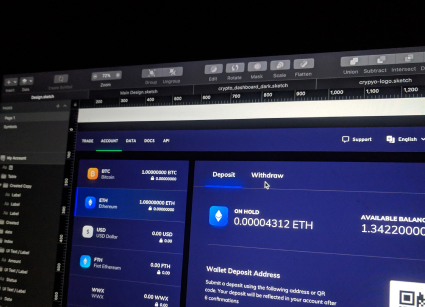
Many people buy their first crypto on an exchange and leave it there. It is convenient: you log in, see a balance and never think about keys or addresses. Moving those coins to a hardware wallet changes that arrangement in a meaningful way.
This guide explains why owners make the move, what is different afterwards, and how to make the first withdrawal without costly mistakes.
Why people move their coins
When your coins sit on an exchange, the exchange holds the private keys. Your account shows a balance, but that balance is the exchange's record of what it owes you. You depend on the platform staying solvent, secure and willing to process your withdrawal when you ask.
For many people that is fine for small amounts or active trading. For savings they plan to keep, it is a lot of trust to place in a third party. Accounts can be frozen, withdrawals can be paused, and a platform can be hacked or simply go out of business.
A hardware wallet removes that middle layer. The keys are generated on your device and stay there. No company has to approve your access to your own funds.
The phrase you will hear often is simple: if you do not hold the keys, you do not fully hold the coins.
What changes when you hold your own keys
Self-custody gives you control, and it also hands you the responsibilities the exchange used to carry.
- There is no password reset. If you lose both the device and your recovery phrase, nobody can restore your funds. The recovery phrase is your backup, and it needs careful storage.
- There is no support desk to reverse a mistake. A transaction sent to the wrong address or the wrong network usually cannot be undone.
- Your funds are no longer tied to an account. They are recorded on the network, and anyone with your recovery phrase can reach them from a compatible device.
- You approve every outgoing payment yourself, on the device, by checking the details on its screen.
None of this is difficult once it becomes routine. It does mean the first transfer deserves your full attention.
Before your first withdrawal
Set up the hardware wallet completely before you move anything to it.
- Initialize the device and write down the recovery phrase on the card or a metal backup. Never type it into a computer or phone, and never photograph it.
- Confirm the backup if your device offers a check of the recorded words.
- Install the companion software from the manufacturer and add an account for the coin you plan to receive.
- Read the exchange's withdrawal page in advance. Many platforms have minimum withdrawal amounts, their own withdrawal fees, and security steps such as confirmation emails, address allow-lists or waiting periods for new addresses.
Knowing these details beforehand keeps you from rushing when the moment comes.
Making the transfer safely
Start with a test amount
Send a small amount first. If something is wrong with the address, the network or your setup, you lose only that small amount. Once the test arrives and shows in your wallet, you can send the rest with confidence. The extra fee for a second transaction is usually a small price for that certainty.
Get the address from the device and check it there
Generate a receive address in your wallet's companion software and confirm it on the hardware device's own screen. The device screen is the part of the setup you can trust, because it does not depend on your computer.
When you paste the address into the exchange's withdrawal form, compare it with the address on the device. Check the beginning, the end and a few characters in the middle. Some malware swaps copied addresses for an attacker's address, so a quick glance at the first few characters is not enough.
Choose the right network
Some coins and tokens can be sent over more than one network, and exchanges often show a list to choose from. The network you pick must match the network your wallet account uses for that asset. Sending over a network your wallet does not support can leave the funds unreachable or very hard to recover.
If you are unsure, stop and check your wallet's documentation for which networks it supports for that asset before sending.
Understand the fees
A withdrawal can involve two kinds of cost:
- The exchange's withdrawal fee, set by the platform and often shown on the form.
- The network fee, paid to process the transaction. It varies with the network and with how busy that network is at the time.
Fees on some networks can be noticeably higher during busy periods. If the amount shown seems out of proportion to what you are sending, it can make sense to wait and try later.
After the coins arrive
A transaction usually needs a number of network confirmations before it is considered final, so it may take a while to appear as settled. Watch for it in your wallet's companion software rather than relying on the exchange's status alone.
Once the full amount has arrived, keep the device and the recovery phrase in separate places. Make a habit of verifying every receive address on the device screen, not only the first one. From here on, the coins are yours to look after, and the device is where every decision about them gets made.